
How to Choose a Men’s Coat for Your Build and the Occasion
A coat should work with your proportions and leave room for the layers underneath. This guide covers shoulders, length, fastenings and lapels, with pointers for different builds and occasions from work to smart casual.
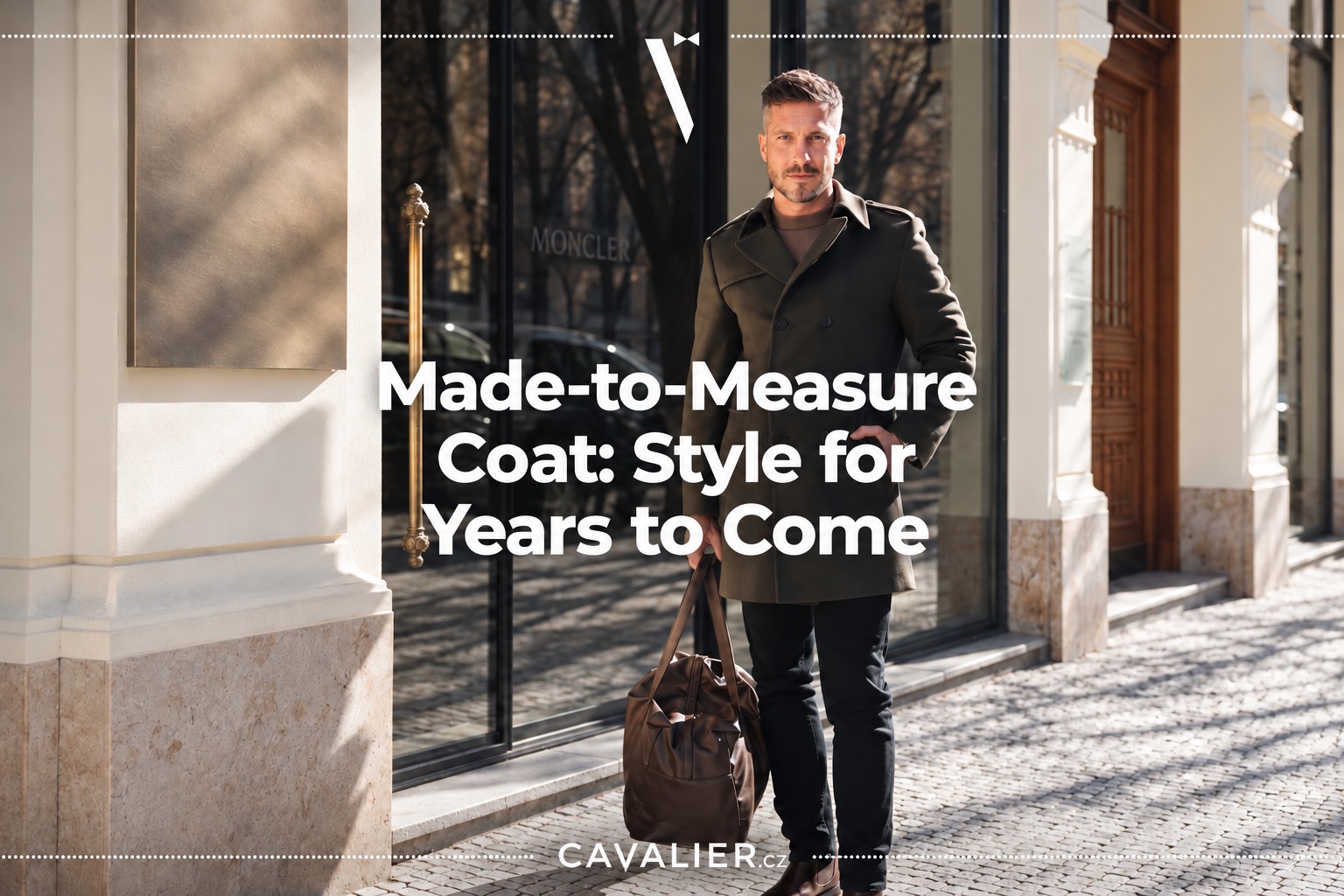
A coat worn over a suit should cover the jacket and allow you to move without pulling across the shoulders or chest. Choose its length and fastening for your build and how you plan to wear it.
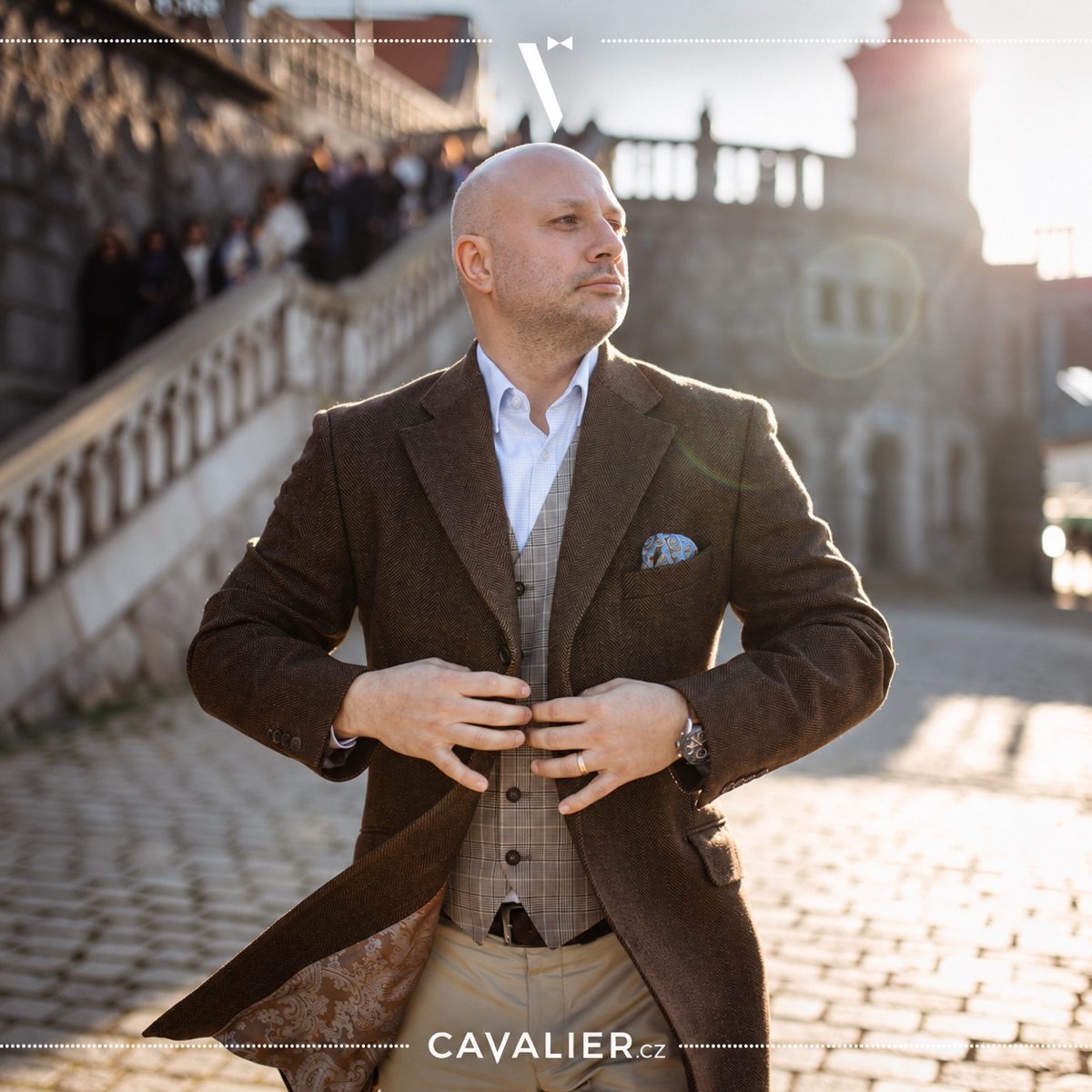
Explore fabrics and configuration options on our made-to-measure coats page .
Start with how you will wear it
Before choosing a colour or buttons, decide what you will usually wear under the coat. A coat over a suit needs more space in the shoulders, chest and sleeves than one worn over a lightweight knit.
If you plan to wear a coat over a jacket, try the two together. A coat that looks fine over a T-shirt may pull across the back or restrict your arms when layered.
For a fabric comparison, read Wool vs Cashmere: Which Coat Material Should You Choose?
How to check the fit
Look at five areas:
1. Shoulders: The shoulder line should sit naturally. A coat that is too wide in the shoulders cannot be fixed simply by taking in the waist.
2. Chest: When fastened, the front should lie cleanly without strong pulling around the buttons.
3. Sleeves: They should cover your jacket sleeves and finish at a length that works for your arms. Check them with the layers you intend to wear.
4. Length: A coat worn over a suit should cover the jacket hem. Its overall length should also suit your height and the occasion.
5. Movement: Walk, sit and lift your arms while trying it on. It should not feel like a tight shell.
Made-to-measure lets you consider these measurements together, taking your build and usual layers into account.
Choosing the length of a coat
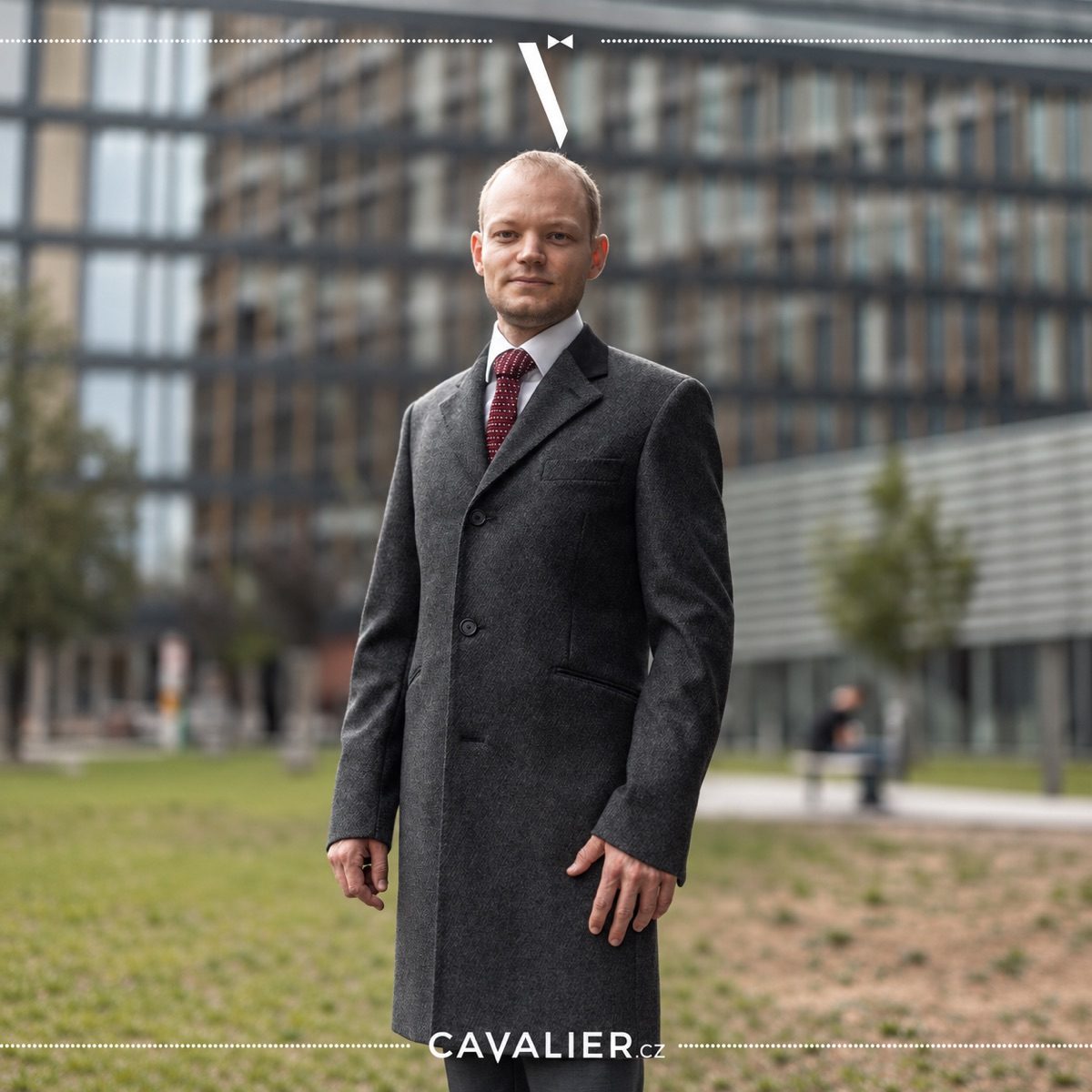
A shorter coat usually looks less formal and can be practical for driving. If you wear it over a suit, make sure the jacket hem does not show below it.
A length around the knee is versatile and offers more coverage. It can work over a business suit or a smart casual outfit.
A longer coat can look more formal. Check that its button position, waist and length work with your proportions and allow you to move comfortably.
Single-breasted or double-breasted?
Single-breasted coat
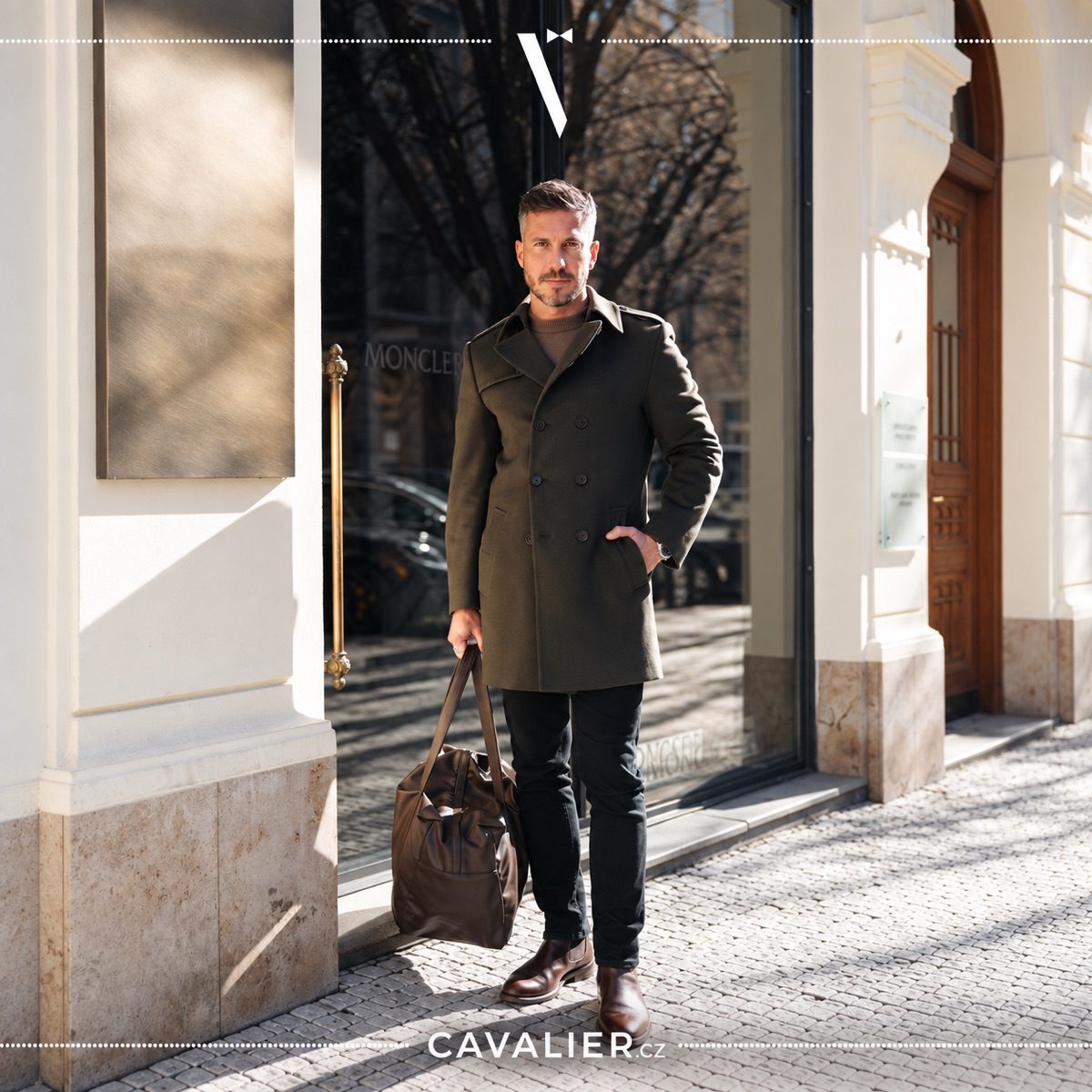
This straightforward cut is easy to combine with different outfits. It can be worn open or closed and may be a useful starting point if you want one coat for work and leisure.
Double-breasted coat
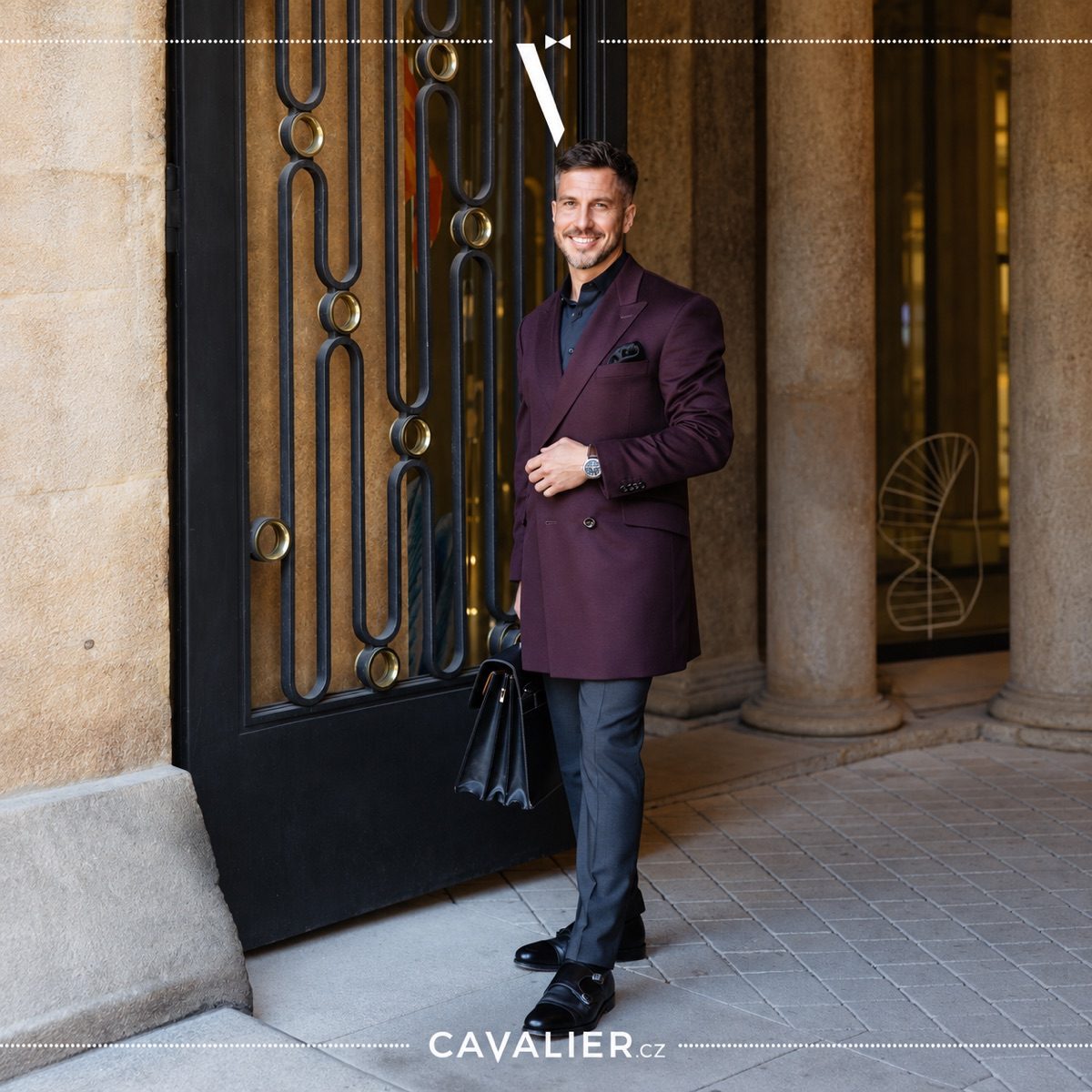
An overlapping front creates a more structured look. Button placement, lapel width and length affect its proportions, so try the complete coat rather than judging the style by name alone.
A double-breasted coat is not reserved for tall, slim men. The fastening, lapels and length can be adjusted to suit different builds.
For a tall, slim build
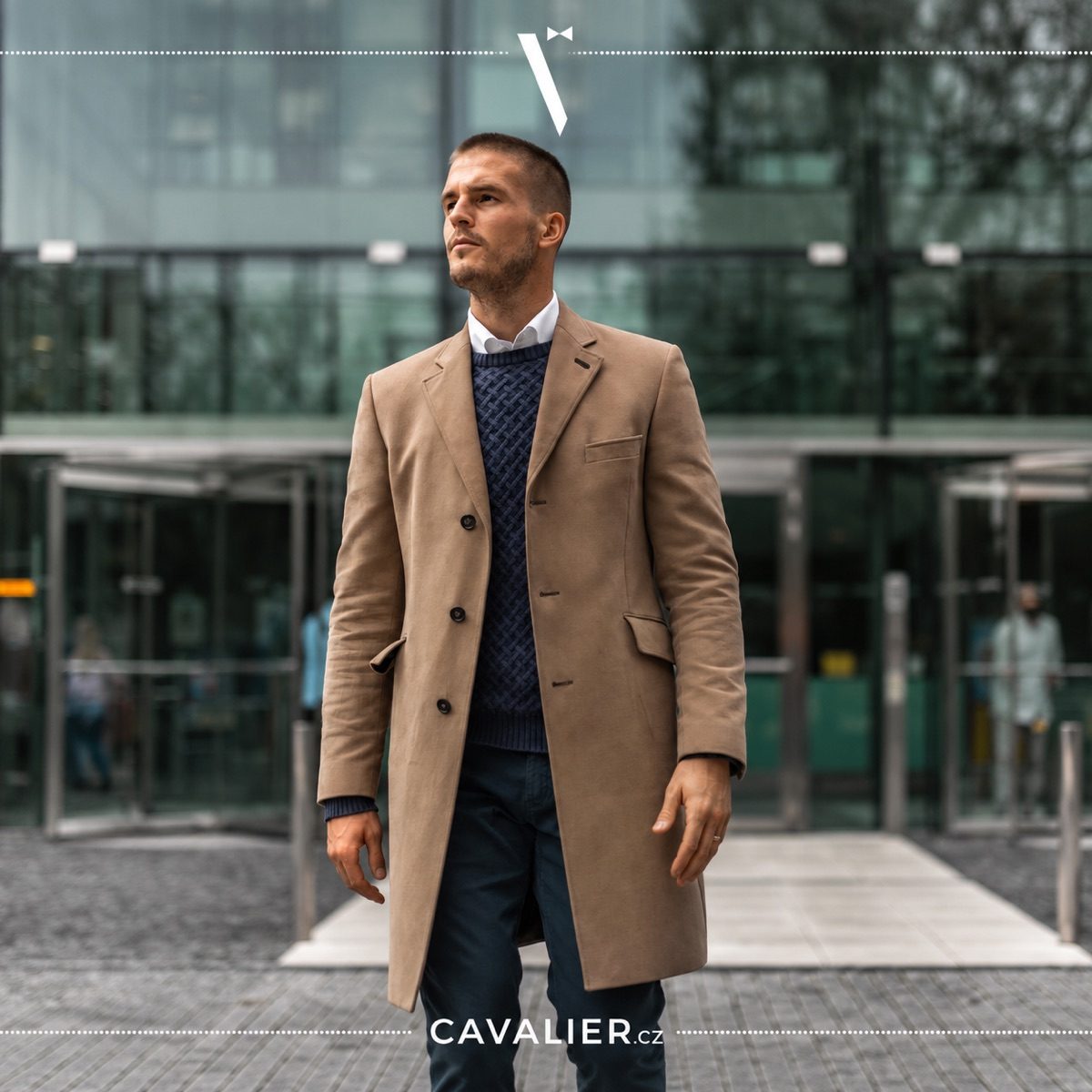
A longer coat or a more pronounced double-breasted front may work well. Lapel width, fabric texture and shoulder shape can help balance the silhouette.
The aim is a coat with shape rather than a long, narrow column.
For more ideas on cut, colour and fabric, read our autumn coat guide.
For a shorter build
A clean vertical line, well-placed shoulders and a suitable length matter more than simply choosing the shortest coat. Check that the waist, pockets and fastening are not set too low.
A restrained single-breasted cut may be easy to wear. Try larger pockets and broader lapels in person to see how they work with your proportions.

For a broader build
Allow enough room without adding unnecessary bulk. A coat that pulls across the chest or stomach is uncomfortable; a very loose one may lose its shape.
Look for a clean shoulder line, comfortable shaping at the waist and lapels in proportion to your torso. Either single- or double-breasted can work when the cut fits.
For an athletic build
Broad shoulders and a narrower waist may be difficult to fit in a standard size. Made-to-measure can allow room through the shoulders and arms while shaping the waist.
Check the armholes as you move. If they sit too low, the whole coat may lift when you raise your arms.
Choosing a coat for the occasion
Business and suits
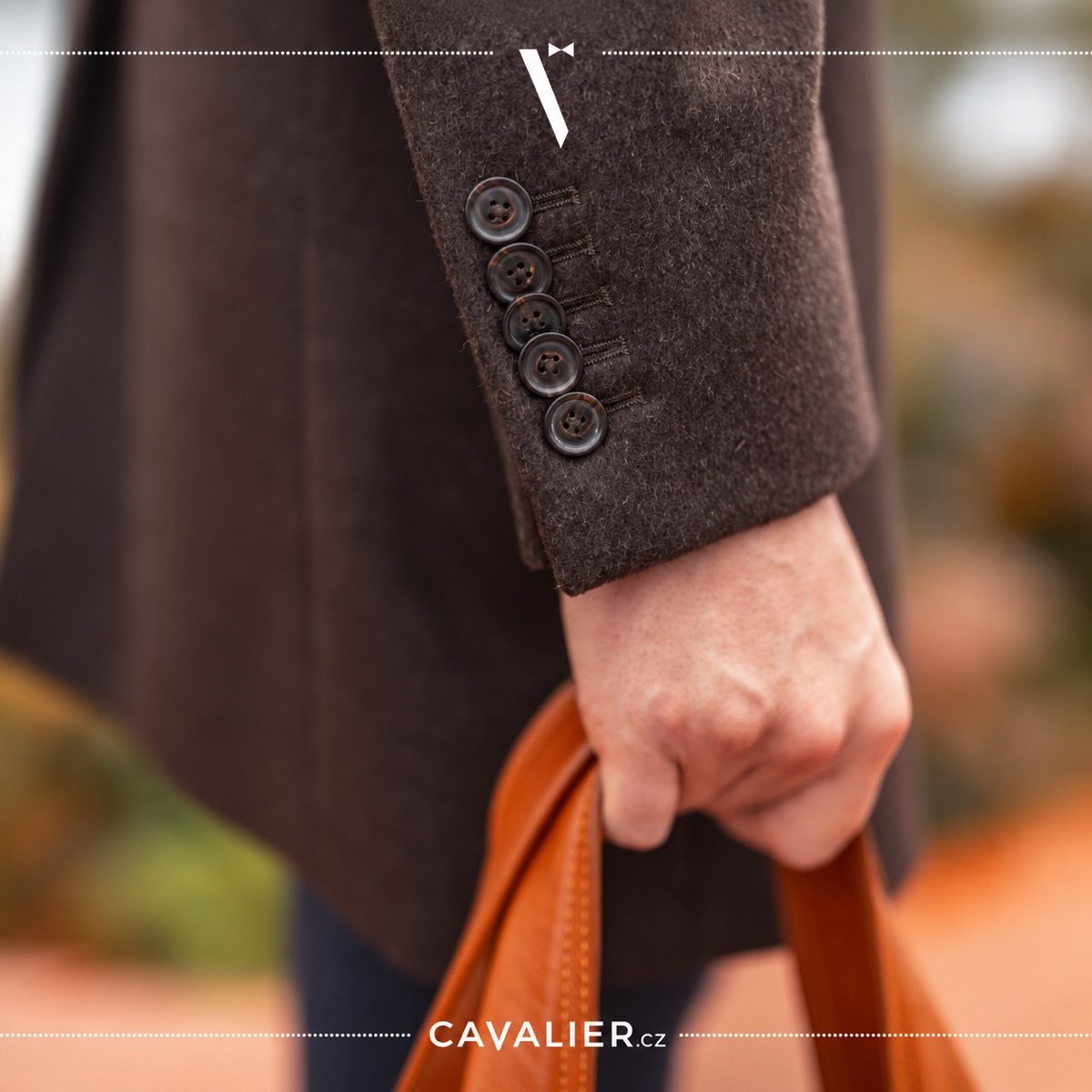
Choose a coat that covers the suit jacket, with a clean cut and a colour that works with your wardrobe. Navy, charcoal and dark brown are flexible options. Wool and wool–cashmere blends are among the available fabrics.
Formal and evening events
A simple darker coat, often with a longer line, can suit a formal outfit. Consider how its fabric and silhouette work with your suit and shoes.
Smart casual and everyday wear
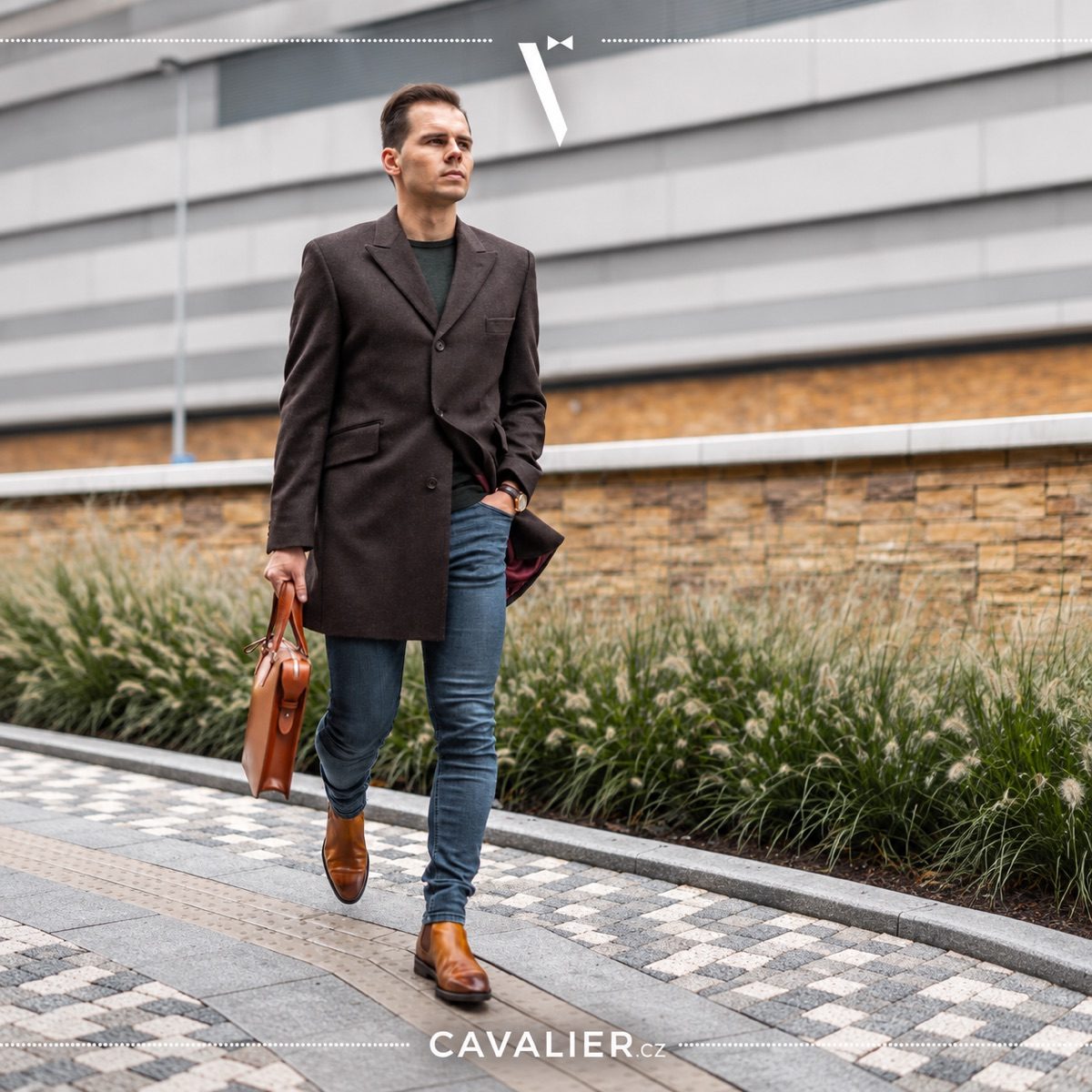
A softer shape, more visible texture or warmer colour can work with a roll-neck, knitwear, chinos or dark jeans.
Travel and driving
A shorter or mid-length coat may be more comfortable when sitting. Try it seated to check the shoulders and chest.
Choosing the colour of a first coat
Start with the clothes you already own. Navy, charcoal and camel are different ways to build a versatile coat; compare them with your suits, trousers and knitwear.
Black may suit very formal or evening outfits. Navy or charcoal can be easier to combine with some everyday business wardrobes.
For a lighter spring or autumn layer, see our guide to the trench coat.
Common mistakes to avoid
– Trying the coat without a jacket when you intend to wear both.
– Choosing a tight cut in the hope that it will look slimmer.
– Overlooking sleeve length.
– Wearing a coat shorter than the jacket underneath.
– Choosing fabric only for its softness, without considering the weather and how often you will wear it.
– Choosing a detail that is difficult to combine with the rest of your wardrobe.
In summary
Choose your coat around your build, the layers underneath and the occasions on which you will wear it. Check the shoulders, chest, length and movement together. Made-to-measure can be useful when standard sizes fit in one area but not another.
Frequently asked questions
Should a coat be larger than a suit jacket?
It needs room to sit cleanly over the jacket and let you move, without looking excessively loose. Try it with the layers you will actually wear.
Where should coat sleeves end?
They should cover the shirt and jacket sleeves. Check the exact length against your arm proportions and usual layers.
Can a shorter man wear a long coat?
Yes. The overall proportions, waist and button placement matter more than an automatic rule to shorten every coat.
Can a double-breasted coat suit a broader build?
Yes, if the lapels, fastening and amount of room suit the wearer. Try the complete cut rather than ruling it out by name.
What coat length is most versatile?
Around the knee or slightly above can work for many outfits. A coat worn over a suit still needs to cover the jacket hem.
Article by Petr Soler
Founder of Cavalier